In short
A website will not sell abroad for you, but it can quietly stop a foreign buyer. The practical checks I would run first: languages, prices and VAT, GDPR, response times and trust.
A lot of the companies we work with sell abroad, or want to. A manufacturer in Türkiye selling to dealers in Europe. A supplier whose buyers sit in the US. A small firm with a good product and a website that only really works for people who already know them.
Going global is mostly sales work, and a website will not do it for you. But a website can quietly stop a foreign buyer before they ever write to you. These are the things I would check first, from what I have seen building for clients in Europe, the US, Türkiye and the Gulf.
Languages: translate the site, not just the homepage
The most common mistake I see is a second language that stops after the homepage. The buyer clicks into a product and lands back in Turkish, or finds an English page that is a year older than the original.
My view is simple. If a language is on the site, every page a buyer needs should exist in it: products, specs, certificates, the contact form and the legal pages. A shorter site in two complete languages beats a long site in one and a half.
Three practical points:
- Run every language on one site. When languages live on separate installs, they drift apart. On one install, a new product reaches every language together. That is how we built Limex Electric: English and Turkish share one WordPress install, one set of templates and one brand database, so the two versions keep the same structure.
- Tell search engines which language is which. Hreflang tags (small labels in the page code) tell Google that a page has a version in another language, so the right one shows up in each market.
- Pay for real translation where it counts. Machine translation is a fine first draft. For product specs, prices, terms and anything a buyer might quote back to you, a person who knows the trade and the language should read it.
Prices, currency and VAT
If you show prices, show them the way the buyer expects to see them. That means their currency, and it means being clear about tax.
In the EU, prices shown to consumers are expected to include VAT. In the US, prices are usually shown before sales tax, which is added at checkout. A business buyer will usually want to see prices without VAT. If you sell to both, say on the page which one you are showing. Ambiguity about tax makes a price look like a trick, even when it is not.
If your products are quoted rather than sold from a list, do not force a price onto the page. Put a quote request on every product instead, so the enquiry arrives already knowing which product it is about. Check the exact tax and pricing rules for your markets with your accountant. I am describing what the page needs to make clear, not giving tax advice.
GDPR and cookie consent
This is where companies outside the EU are most often surprised. The EU's data protection rules, GDPR, apply to a company outside the EU when it offers goods or services to people in the EU. The EU's own guide for businesses says so directly, and adds that such companies must appoint a representative in the EU.
For the website, that means at least:
- A privacy notice that says what you collect through the site, why, and how long you keep it.
- A cookie banner that asks before setting analytics or advertising cookies, and lets people say no as easily as yes.
- Contact forms that only ask for what you need, with a link to the privacy notice next to them.
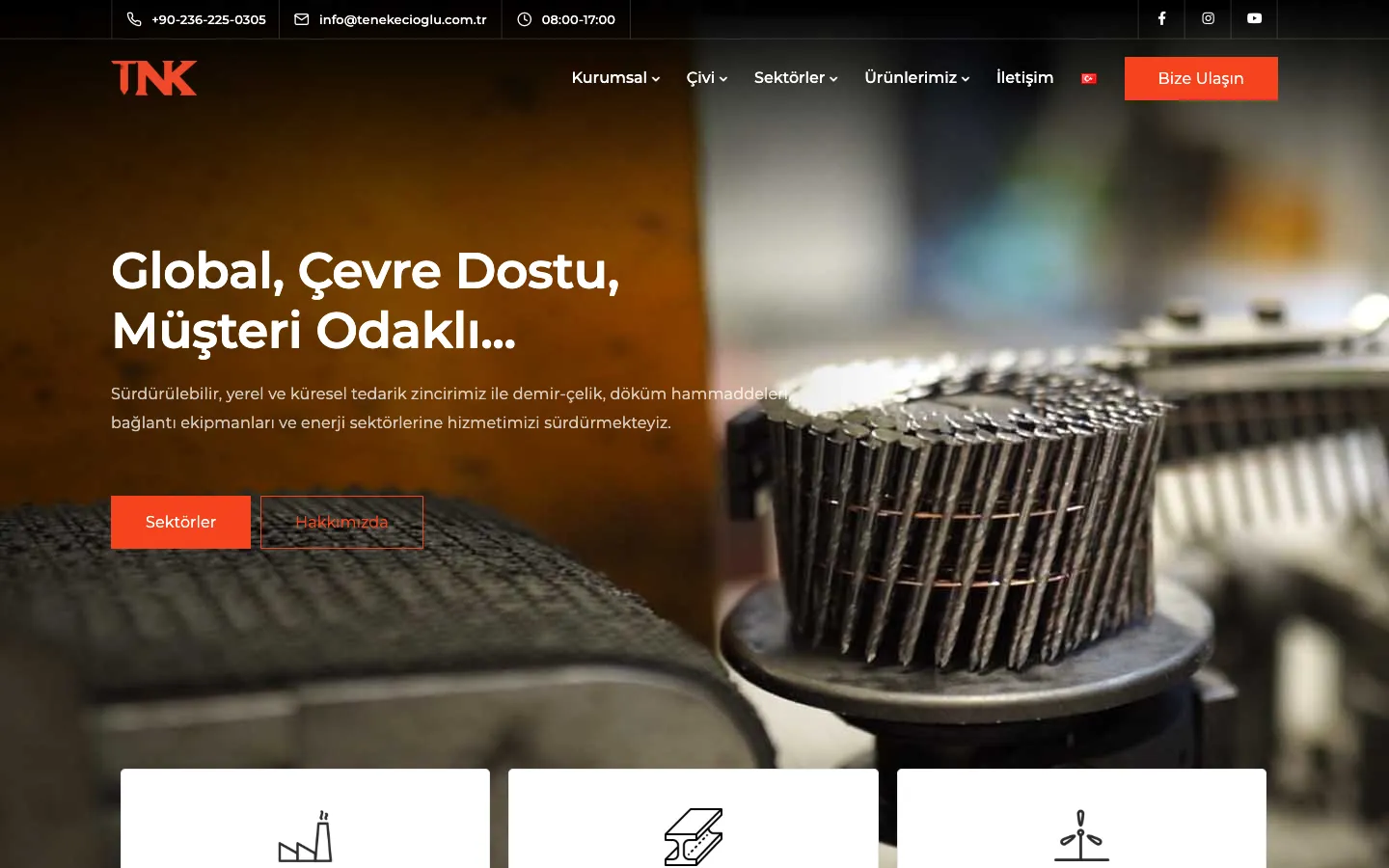
Türkiye has its own data protection law, KVKK, and a Turkish site selling at home and abroad needs to respect both. On Tenekecioğlu, a nail and steel exporter selling mainly to the US, the personal data protection policy sits on the corporate page next to the ISO certificates. That is the right instinct: treat privacy as part of your credentials, not a footnote.
Time zones and response times
A buyer in Chicago who sends an enquiry at the end of their day may reach you in the middle of your night. If the reply comes two days later, they have already spoken to someone else.
You do not need someone awake around the clock. You need three things: an automatic reply that confirms the message arrived and says when a person will answer, enquiries that go straight to a named person rather than a shared inbox nobody owns, and a promise about response time that you actually keep. A short honest promise beats a long one you miss.
Trust signals foreign buyers look for
A buyer who has never heard of you checks before they write. In my experience they look for the same few things:
- Specs they can compare. The same spec table on every product, not a PDF they have to download and read.
- Certificates one click away. ISO certificates and registrations on the product and company pages, not sent on request.
- A real company behind it. A legal company name, an address, a phone number and named people.
- Work they can see. Projects, sectors or customers you are allowed to name.
- A site that is current. Old news on the homepage and a copyright year from years ago tell a buyer nobody is home.
These are the same things we put first when we build an export product catalogue: one spec table per product family, certificates on the page, every language on one site, and a quote button on every product.
Working with a team spread over three cities
We run this way ourselves. Our headquarters is in Galata, Istanbul. We have an office in Miami. I live and work in Amsterdam. Our clients are in Europe, the US, Türkiye and the Gulf.
What I have learned is that distance is not the problem. Unclear ownership is. A spread team works when every client knows who is responsible for their system, decisions are written down rather than lost in calls, and handover between time zones is part of the plan. It fails when everyone assumes someone else is watching.
A spread team also has a real advantage for exporters: someone is usually awake in your buyer's working hours, and the people building your site have read it the way your buyer will read it.
Where I would start
If you only do one thing this month, open your own site in the language your best foreign buyer reads, on a phone, and try to find a product's spec, its certificate and a way to ask for a quote. Note every place you get stuck. That list is your plan.
If you want us to look at it with you, write to us through the contact page.
FAQ
Frequently asked questions
Tagged