
In short
Shippers book with whoever replies with a rate, not a question. The fields a quote form needs for each freight mode, and how to keep it short anyway.
A shipper sends a rate request to three brokers. Two reply with questions: what are the dims, is it stackable, does the consignee have a dock? One replies with a rate. The shipper books the one with the rate, and the other two never hear back. Nobody lost on price. They lost on the second email.
Most of those second emails are avoidable. The facts a pricing desk needs for each mode are well known, and a quote form can ask for them up front. The trick is asking for them without turning the form into a tax return. Below is what we ask for, mode by mode, and why each field is there. Then how to keep it short.
The fields every request needs, whatever the mode
Before the mode-specific questions, every request needs the same core:
- Origin and destination, as addresses or ZIP/postal codes. A city name is not enough to price a lane or check whether the pickup is residential. Address autocomplete makes this the easiest field on the form, not the hardest.
- Ready date and delivery deadline. A load ready tomorrow and a load ready in three weeks are different quotes.
- Commodity, in plain words. "Bottled water on pallets" tells your desk more than a code picked from a dropdown.
- Total weight and piece count. With the unit (lb or kg) shown next to the field, not guessed.
- Contact name, email and phone. And a company name, so the request can be matched to an existing account.
Everything else depends on the mode. That is why one generic contact form does not work: it either asks every shipper every question, or asks none of them.
FTL: equipment, dates and the two ends of the trip
A full truckload (FTL) is one shipper's freight filling, or paying for, a whole trailer. The rate depends mostly on the lane, the equipment and the timing, so that is what the form asks.
- Equipment type: dry van, flatbed, step deck, reefer. Flatbed loads also need to say whether tarps or straps are required.
- Pickup and delivery windows, and whether either end is an appointment or first-come, first-served.
- Live load or drop trailer. A driver waiting two hours while a trailer is loaded costs differently from a trailer dropped and collected later.
- Stops. One pickup and one delivery, or extra stops on the way.
- Weight, because a heavy load can limit which trucks can take it.
LTL: class, dims and what happens at the dock
Less than truckload (LTL) freight shares a trailer with other shippers, and it is priced from how much space and handling it takes. This is where generic forms fail most often, because the missing fields are the ones that set the price.
- Freight class, if the shipper knows it. Class is the LTL rating category set by the National Motor Freight Classification. Many shippers do not know theirs, so make it optional and ask for the facts it is worked out from.
- Dimensions per handling unit (length, width, height) and weight per unit. With these, your desk can work out density and check the class.
- Number of pallets or pieces, and whether they are stackable.
- Accessorials, the extra services that change an LTL rate: liftgate at pickup or delivery, residential address, inside delivery, limited-access site, delivery appointment. Ask them as yes/no checkboxes, never as a free-text box.
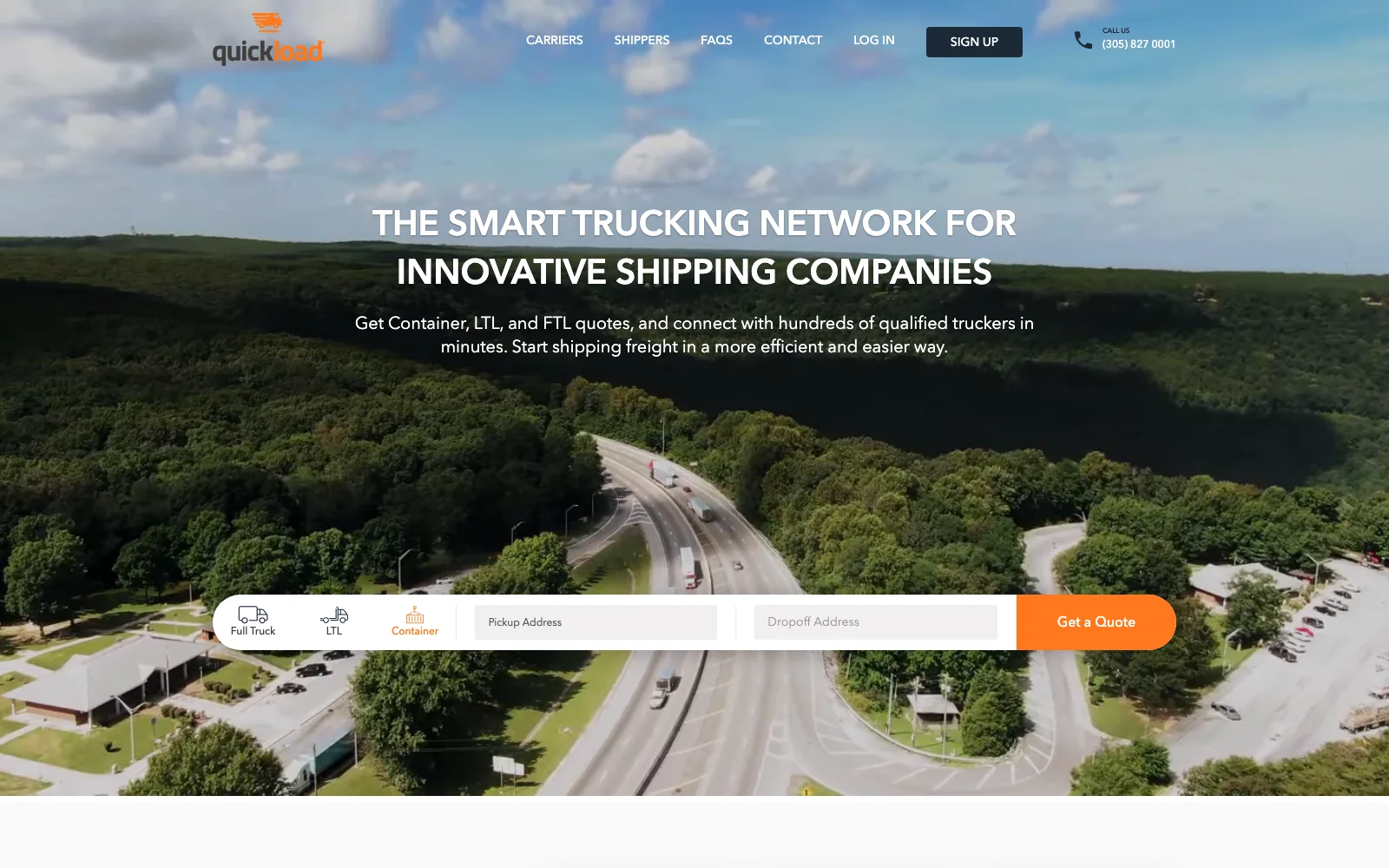
When we built the quote widget on Quickload, a Miami freight network for drayage, LTL and FTL, it had a tab for each mode (Full Truck, LTL and Container) and asked for freight type, route and freight details up front. Each tab only shows its own fields, so an FTL shipper never sees a pallet-dimension grid.
Reefer: the temperature is part of the price
A reefer is a refrigerated trailer. Reefer loads carry everything an FTL or LTL request carries, plus the facts that decide whether the load can go at all:
- Required temperature or range, with the unit (°F or °C) shown. A load at -10 °F and a load at 34 °F are not the same job.
- Continuous or start-stop running. Some commodities need the unit running all the time; others can let it cycle.
- Whether the product is loaded already cold, and whether the trailer must be pre-cooled.
- Temperature records needed at delivery, if the receiver will ask for them.
- Mixed temperatures, if the shipment has frozen and chilled freight together.
Put these behind a single "temperature controlled?" yes/no. A dry-van shipper should never see them.
Hazmat: ask once, then ask properly
Hazardous materials (hazmat) change who can carry the load, what papers travel with it and often the rate. The worst outcome is finding out at pickup. So the form asks one yes/no question for every shipment, and if the answer is yes, it asks for what the shipping papers will need anyway.
In the US, the basic description on a hazmat shipping paper is set out in 49 CFR 172.202: the UN or NA identification number, the proper shipping name, the hazard class or division, and the packing group, plus the total quantity and the number and type of packages. A quote form can ask for exactly those:
- UN or NA number
- Proper shipping name
- Hazard class or division
- Packing group (I, II or III, where one applies)
- Quantity and packaging, such as drums, IBCs or cartons
- A safety data sheet upload, for the desk to check
Outside the US the rules differ (ADR for road transport in Europe, for example), but the same facts sit at the centre. If the shipper cannot answer, the form should still let them send the request with the safety data sheet attached. That is one email instead of three.
International and customs: who handles what at the border
For forwarders, the mode is only half the quote. The other half is who pays for what, and who clears customs. The fields:
- Incoterms rule, such as EXW, FOB or DAP. It says where the seller's responsibility ends and the buyer's starts, so it decides which legs and charges you are quoting. Offer a short list plus "not sure".
- Origin and destination ports or airports, as well as door addresses if door-to-door.
- Mode: ocean FCL (a full container), ocean LCL (shared container space), air or road.
- Container size and type for FCL; dims and weight per piece for LCL and air.
- Customs clearance needed, at origin, destination or both, and whether the shipper already has a customs broker.
- HS code, if known. This is the product's customs tariff code. Many shippers will not have it; let them describe the goods instead.
- Declared value of the goods, if insurance or duties are part of the quote.
Drayage: the facts that a container quote cannot do without
Drayage, the short trucking leg moving containers to and from a port or rail ramp, has its own short list. On the site we built for BOS Global Logistics, a Miami freight and warehousing group, each of six services has its own quote form. The drayage form asks for pick-up and drop-off locations, container size, type and quantity, and seven accessorial options such as overweight, pre-pull, bonded or extra leg. Pre-pull means collecting a container from the port before the delivery date, usually to beat storage charges. If the form does not ask, the desk has to.
How to keep the form short anyway
Read the lists above and the obvious worry is a form with forty fields. It does not have to be. A shipper should only see the fields that apply to their load.
Ask the mode first, then branch
The first question is the service: FTL, LTL, drayage, international. Each answer opens its own set of fields, as a tab or a separate form. That is how both of the freight sites above work. A shipper booking a dry-van FTL load sees perhaps ten fields.
Use conditional fields for the rare cases
Reefer, hazmat and customs details stay hidden behind one yes/no each. Most shippers answer "no" and move on; the few who answer "yes" get the full set. This is the single biggest saving in length.
Set sensible defaults
- Pick the units from the visitor's country, but let them change them.
- Default "number of stops" to one pickup and one delivery.
- Make freight class and HS code optional, with "not sure" as a real answer.
- Remember contact details for a returning shipper on the same device.
Let them upload instead of type
Many shippers already have a packing list, a commercial invoice, a BOL or a safety data sheet. A file upload field lets them attach it and skip the typing. Your desk reads the dims and weights from the document. Accept PDF, spreadsheet files and phone photos, since a lot of requests are sent from a phone at a dock.
Mark what is required, and why
Required fields should be the few without which nobody can quote: route, date, mode, weight. Everything else is optional but helpful. A short hint under a field ("used to check if a liftgate is needed") makes people far more likely to fill it in.
A five-minute test of your own form
- Pull the last ten quote requests that came in through your site.
- For each one, note what your desk had to ask before it could send a rate.
- If the same question shows up three or more times, that is a missing field.
- Check the form on a phone. If the dims grid or the date picker is hard to use there, that is why it is coming back empty.
- Submit a test request yourself and see where it lands, and in what shape.
If you would like the forms built for you, we add them to the site you already have, one per service, at a fixed price. See how we approach freight quote forms, or run the checklist on that page first.
FAQ
Frequently asked questions
Tagged